Exploring the Conveniences and Applications of Aluminum Foundry in Modern Manufacturing
Aluminum foundries play a substantial role in modern manufacturing throughout different sectors. Their capacity to generate light-weight, sturdy elements is specifically advantageous in sectors such as automotive and aerospace. Aluminum Foundry. The innovative casting strategies used enable detailed styles that enhance item functionality. However, the effects of Aluminum manufacturing prolong past immediate benefits. Recognizing these characteristics increases essential inquiries regarding future developments and sustainability practices in this vital market
Recognizing Aluminum Foundries: An Introduction
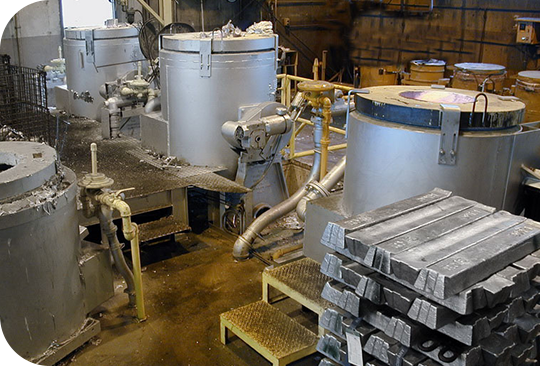
Aluminum shops play a crucial duty in the production industry by specializing in the casting of Aluminum products. These facilities utilize different methods, consisting of sand casting, die spreading, and investment casting, to create components ranging from automotive components to consumer items. The procedure begins with melting Aluminum, complied with by putting it right into mold and mildews to achieve wanted forms.
Foundries are outfitted with advanced innovations that boost efficiency and accuracy in production. Experienced labor is important in taking care of the intricate processes and guaranteeing top quality control throughout the operation.
Along with producing basic items, Aluminum shops frequently cater to custom-made orders, enabling businesses to create distinct elements tailored to details applications. The flexibility of Aluminum, combined with the experience of Foundry employees, enables development in design and performance, making Aluminum factories a critical element in the broader manufacturing landscape.
Key Advantages of Aluminum in Manufacturing
The advantages of Aluminum in production are numerous, contributing to its widespread use across different sectors. One of the key benefits is its lightweight nature, which considerably minimizes power usage during transportation and handling. In addition, Aluminum displays excellent corrosion resistance, making it excellent for applications in extreme atmospheres. Its high strength-to-weight proportion warranties that items maintain structural honesty while continuing to be simple to manipulate.
Aluminum's versatility permits a series of fabrication techniques, consisting of spreading, extrusion, and machining, supplying suppliers with versatility in design. Moreover, the material is very recyclable, promoting sustainability and minimizing overall environmental effect. Aluminum likewise supplies superior thermal and electrical conductivity, making it ideal for numerous applications, consisting of heat exchangers and electric elements. With each other, these advantages emphasize Aluminum's critical duty in modern manufacturing, enhancing efficiency, decreasing costs, and supporting innovative product development across numerous markets.
Applications of Aluminum Foundries in the Automotive Market
In the automotive industry, where weight decrease and gas efficiency are extremely important, Aluminum shops play an important duty in making parts that satisfy these demands. The light-weight nature of Aluminum permits the production of crucial parts such as engine blocks, transmission housings, and wheels, which add to total automobile performance. Furthermore, Aluminum's exceptional rust resistance boosts longevity, minimizing upkeep prices for consumers and suppliers alike.
Aluminum foundries likewise allow the development of complex geometries via sophisticated spreading techniques, permitting for cutting-edge styles that boost the rules of aerodynamics and performance. Furthermore, the recyclability of Aluminum lines up with the sector's growing focus on sustainability, helping with the production of environmentally friendly vehicles. As vehicle makers increasingly look for to balance efficiency with environmental obligation, Aluminum factories are becoming integral to the advancement of next-generation cars, driving innovation and efficiency in the market.
The Function of Aluminum in Aerospace Design
A solid and light-weight product, Aluminum has actually become significantly crucial in aerospace engineering, similar to its function in the automotive market. Its desirable strength-to-weight ratio permits for the design of fuel-efficient aircraft, adding to reduced functional costs and reduced emissions. Aluminum alloys are widely utilized in aircraft structures, including bodies, wings, and other vital components, providing exceptional corrosion resistance and durability.
The pliability of Aluminum promotes intricate forms and layouts, which are vital for the rules of aerodynamics. The material's thermal conductivity likewise plays an important duty in managing warm in numerous aerospace applications. As the aerospace sector remains to progress, the combination of Aluminum shops supports advancements in manufacturing processes, improving accuracy and minimizing waste. This pattern emphasizes the relevance of Aluminum in producing sophisticated, lightweight frameworks that meet the stringent security and performance criteria of modern aviation.
Innovations in Customer Electronics Through Aluminum Foundries
Aluminum shops add significantly to technologies in customer electronic devices by giving light-weight materials that improve mobility. Additionally, the superior warmth dissipation residential properties of Aluminum aid to boost tool efficiency and durability. These advantages setting Aluminum as a vital gamer in the advancement of modern electronic gadgets.
Light-weight Product Benefits
Although customer electronic devices require light-weight materials for boosted portability and efficiency, Aluminum factories have actually become crucial players in conference this need (Aluminum Foundry). The unique homes of Aluminum, including its high strength-to-weight ratio, make it an excellent option for producers aiming to lower item weight without endangering sturdiness. By utilizing advanced casting strategies, Aluminum factories can produce intricate, lightweight parts that fit flawlessly into various electronic gadgets. This innovation not only boosts the user experience yet likewise sustains energy performance, as lighter gadgets usually eat less power. Furthermore, the flexibility of Aluminum permits innovative styles, enabling makers to press the limits of visual appeals and performance. Therefore, Aluminum shops play an important duty in the evolution of consumer electronic devices
Enhanced Warmth Dissipation
Consumer electronics increasingly rely upon materials that not only minimize weight however also enhance performance. Aluminum, with its excellent thermal conductivity, plays an essential role in taking care of warmth dissipation in tools such as laptop computers, smartphones, and pc gaming consoles. The use of Aluminum Foundry strategies enables manufacturers to produce complex layouts that enhance air flow and cooling down efficiency. This development brings about boosted tool efficiency and longevity, as overheating can considerably influence digital elements. Additionally, Aluminum's light-weight nature contributes to extra mobile layouts without compromising thermal monitoring. As consumer needs for streamlined, high-performance devices proceed to increase, Aluminum foundries are necessary in establishing solutions that attend to these obstacles while ensuring customer satisfaction and tool reliability.
Sustainability and Ecological Effect of Aluminum Production
As industries significantly prioritize sustainability, the ecological influence of Aluminum manufacturing has actually come under examination. The extraction and refining of bauxite ore into Aluminum is energy-intensive, typically depending on nonrenewable fuel sources, which add to greenhouse gas exhausts. The Aluminum market is making strides towards lowering its carbon footprint. Recycling Aluminum, as an example, calls for just 5% of the energy needed for key go to my site production, substantially reducing discharges and resource consumption.
In addition, advancements in production methods aim to boost performance and reduce ecological deterioration. Companies are increasingly purchasing renewable resource resources, such as wind and solar, to power their operations. Using closed-loop water supply and waste reduction strategies also mitigates water pollution and source waste.
Future Patterns in Aluminum Foundry Innovation
Automation and Robotics Combination
While lots of markets are welcoming technological improvements, the Aluminum Foundry market is positioned for substantial makeover via automation and robotics assimilation. This shift aims to improve production performance and decrease labor costs. Automated systems can perform recurring tasks with precision, lessening human mistake and boosting outcome uniformity. Robotics can also assist in complex operations such as mold and mildew handling, putting, and top quality assessments, resulting in enhanced safety and minimized workplace hazards. In addition, the integration of advanced robotics permits real-time surveillance and information analytics, enabling makers to optimize processes continuously. As the sector embraces these innovations, it is expected that the Aluminum Foundry will certainly experience raised competitiveness and advancement, establishing a new requirement for producing practices in the market.
Lasting Manufacturing Practices
With automation and robotics reshaping the Aluminum Foundry landscape, a concurrent shift in the direction of lasting production techniques is coming to be increasingly prominent. Shops are taking on energy-efficient innovations that lower carbon emissions and lower power intake. The combination of recycling processes enables the usage of scrap Aluminum, lessening waste and conserving natural deposits. Additionally, advancements in casting methods, such as 3D printing, make it possible for more reliable material use, decreasing the environmental impact. Firms click resources are additionally prioritizing water conservation by applying closed-loop systems that recycle water within the manufacturing cycle. As industry stakeholders identify the value of sustainability, governing conformity and consumer demand will better drive the adoption of these methods, placing Aluminum factories as leaders in environmentally liable production.
Frequently Asked Inquiries
What Sorts Of Aluminum Alloys Are Generally Made Use Of in Shops?
The kinds of Aluminum alloys frequently utilized in factories consist of 3xx.x collection, recognized for outstanding corrosion resistance, and 4xx.x series, which supplies excellent fluidity. These alloys are favored for different spreading applications in manufacturing processes.
How Does the Aluminum Casting Process Differ From Various Other Metal Casting Processes?
The Aluminum spreading procedure includes melting Aluminum and putting it right into molds, varying from other metals that may need greater temperatures or various strategies - Aluminum Foundry. This process permits for elaborate layouts and lightweight elements, improving adaptability in producing applications
What Security Procedures Are Absorbed Aluminum Foundries?
In Aluminum foundries, precaution consist of individual safety tools, correct ventilation systems, normal equipment upkeep, and training programs. These procedures aim to decrease threats connected with heat, fumes, and dealing with liquified metal, guaranteeing employee security.
Can Aluminum Foundries Recycle Scrap Aluminum Effectively?
Aluminum shops can successfully reuse scrap Aluminum, using advanced processes to thaw and recycle materials. This not only decreases waste however likewise conserves energy and resources, adding to an check this site out extra lasting production atmosphere on the whole.
What Is the Regular Lead Time for Aluminum Castings Production?
The common preparation for Aluminum castings manufacturing differs, commonly varying from 2 to eight weeks. Variables influencing this timeline include design intricacy, production quantity, and the Foundry's operational ability and organizing performance.
Aluminum shops play an essential duty in the manufacturing industry by specializing in the casting of Aluminum products. In enhancement to creating conventional items, Aluminum foundries frequently provide to custom-made orders, making it possible for organizations to establish distinct components tailored to certain applications. As the aerospace sector proceeds to progress, the integration of Aluminum shops supports innovations in making processes, enhancing accuracy and minimizing waste. The Aluminum casting procedure entails melting Aluminum and pouring it right into molds, varying from other steels that might need higher temperatures or different techniques. Aluminum factories can successfully reuse scrap Aluminum, utilizing advanced procedures to melt and recycle products.
Comments on “Why Aluminum Foundry is critical for modern projects”